“Transportation affects how we live, work, and play, but not many books explain how the whole system actually fits together. This is a practical, easy-to-read resource for professionals, students, and anyone who wants to understand how transportation shapes our communities. Honestly, it’s the kind of book our industry needs.”
—Veronica O. Davis, PE, civil engineer and author of Inclusive Transportation
“If you have anything to do with designing transportation or cities, this book should be on your desk. When I was a young engineer, I was taught that bigger means better. It doesn’t. We’d all be better off if designers understood the geometry of each transportation mode and how those limits shape our cities.”
—Wes Marshall, PhD, PE, professor at the University of Colorado Denver, cohost of the Look Both Ways with David & Wes podcast, and author of Killed by a Traffic Engineer
"Transportation and the Shape of Cities . . . has changed how I view the challenge of moving city dwellers around. . . . [The book]is predominantly written for planners, engineers, architects, and other professionals in urban design and city management. But it is packed with information that would appeal to an average city dweller who’s curious about their surroundings."
—Laurie Winkless, Forbes
"Handy. . . . and concise."
—Tom Vanderbilt, Vertical Urbanism Magazine
"Excellent cookbooks for electeds, wonks and your mom."
—Sam Sklar, Exasperated Infrastructures Substack
"Teaching materials at Rice University became a guidebook as big, yellow and authoritative as a highway sign."
—Daniel Safarik, Unfrozen Podcast
“Every page of this book is a lesson, conveying important concepts in a clear and visually engaging way. It should be on the desk of any elected official, city leader, professional, student, or community member who wants to make their transportation system work better for people.”
—Jennifer Dill, Portland State University
“Distilling the essentials from other noted urbanists, Spieler, Copeland Loredo, and Chapa offer a primer on the role for each mode of transportation and how they work together to make—or damage—great cities. Their main point is critical: functional urban transport is not about ideology but geometry. They help us explore a timeless question: How should we design cities’ limited street rights-of-way to best move people and goods and achieve our economic, social, and environmental goals?”
—Jeffrey Tumlin, former executive director of the San Francisco Municipal Transportation Agency
Our Cities are Shaped by How We Move
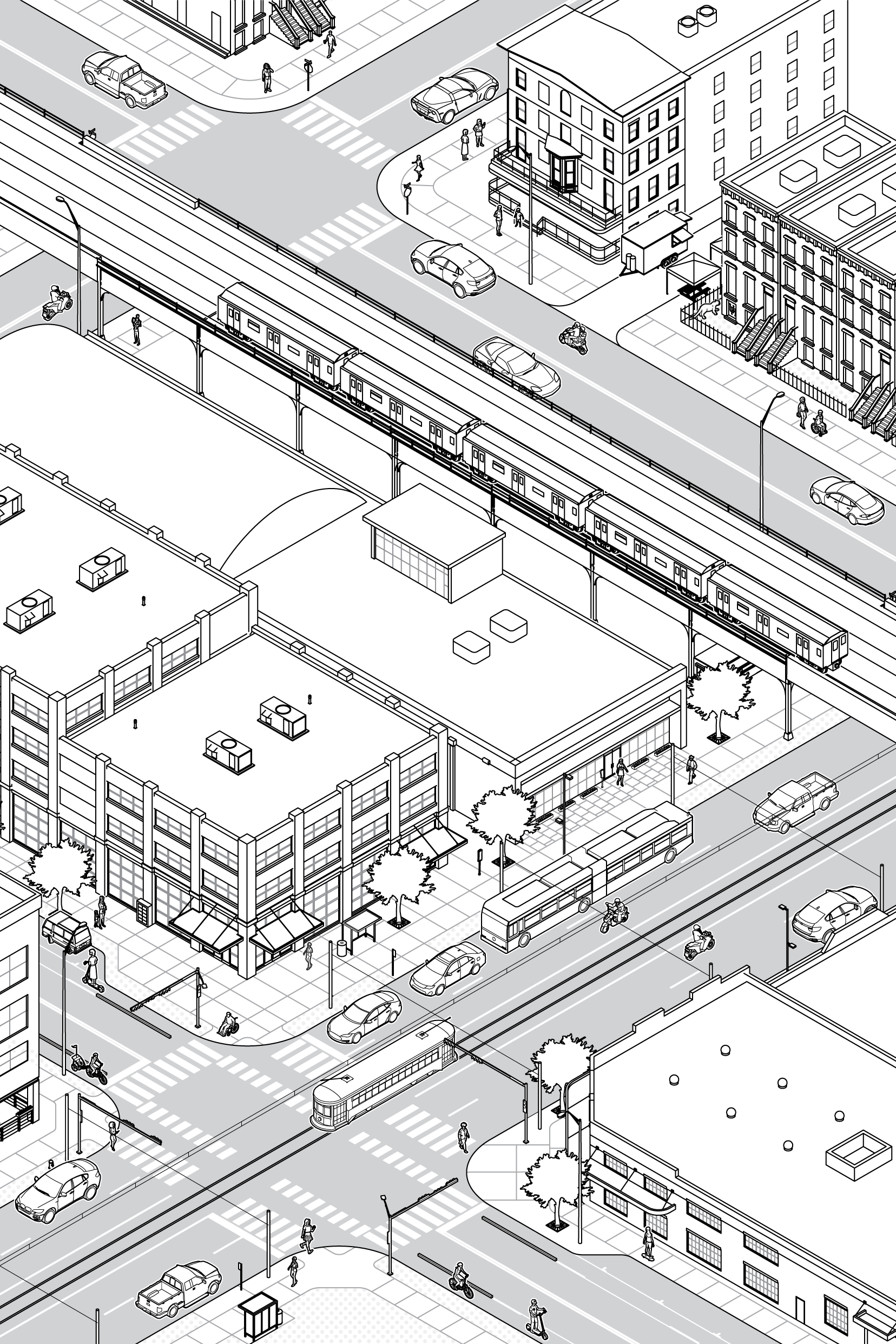
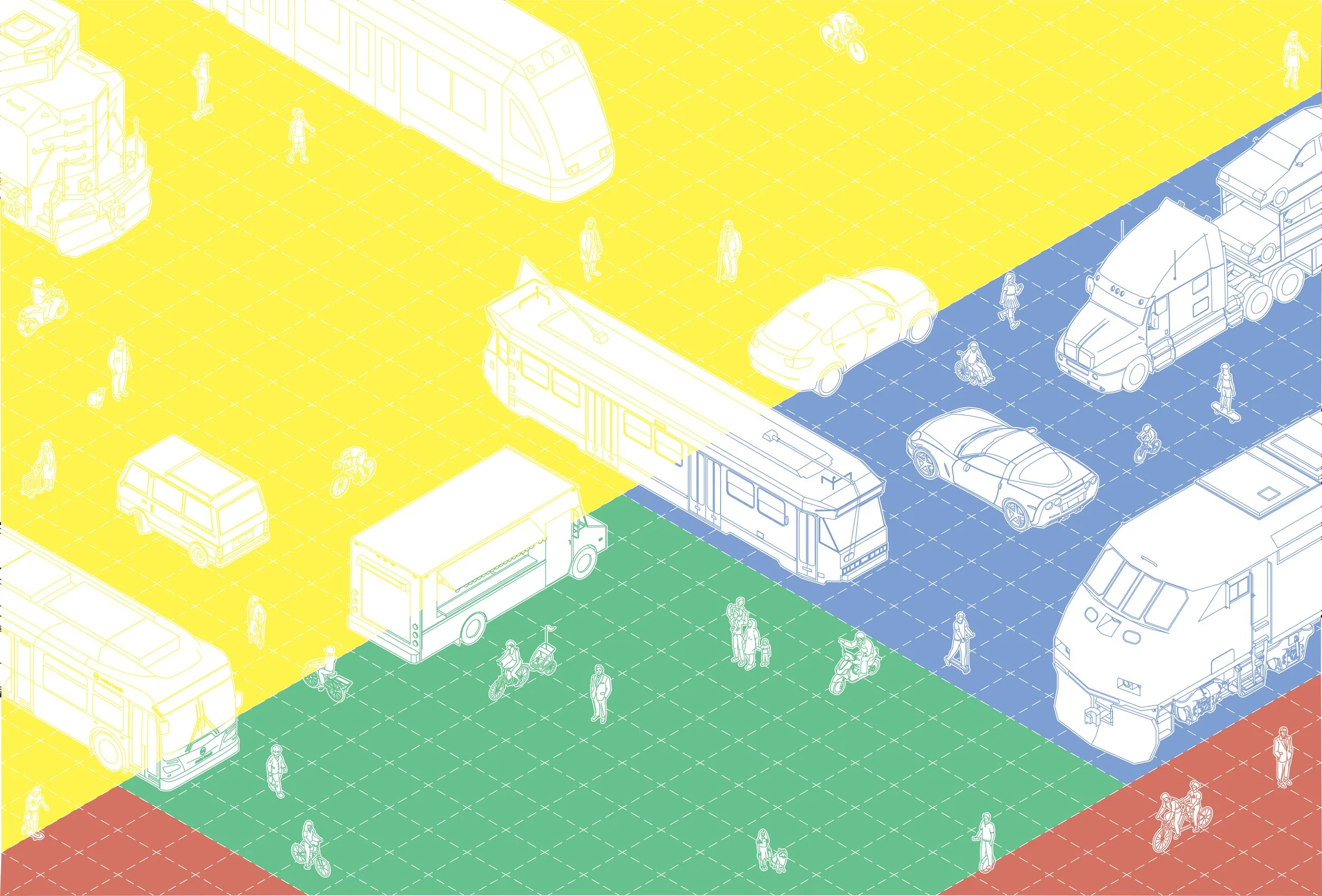
Transportation in cities has one undeniable limitation: space. Each mode of urban transportation has inherent geometric properties that no amount of policy or design can change. Designing transportation is always a problem of geometry: if we want to add something new, we need space for it. This is never easy—historically, the decisions about reallocating space have negatively impacted people without power and means. Planning for transportation in cities a design problem requiring thoughtful planners, engineers, landscape architects, urban designers, and policy makers. Understanding the properties of each mode is fundamental to good design in cities.
In Transportation and the Shape of Cities, transportation experts Christof Spieler, Armandina Chapa, and David Copeland Loredo take a comprehensive look at the five major modes of US transportation—pedestrian, micromobility (including the bicycle), car, train, and transit. For each, they consider the theory and discuss its geometry, how it works as a network, its role in the transportation system, and how it fits into urban design.
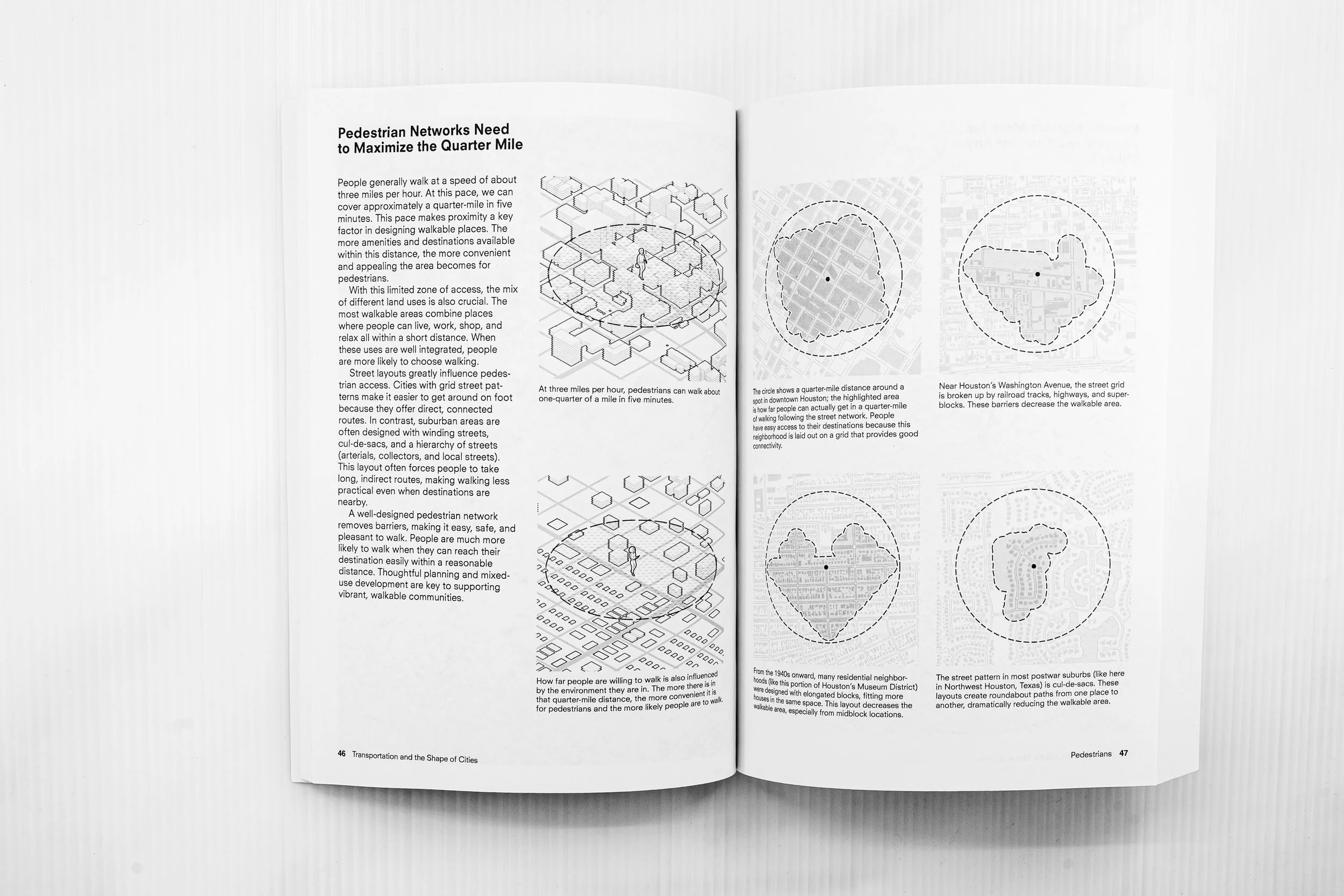
Transportation and the Shape of Cities is a visually rich tool to help people plan cities. It is not a design standard, but a guide to solving the design problem of the limitations of space and the geometrical characteristics of each transportation mode. The information will help someone answer a question such as “How much space should there be in front of this building for a good sidewalk?” or “Would a bike lane fit in this street?” or “How long would an overpass over this railroad be?” Dimensioned drawings appear throughout, along with discussions of the factors that drive the dimensions.
Transportation matters because it shapes all of our lives. We can make transportation networks better through thoughtful design, informed policy, and inclusive conversations. Transportation and the Shape of Cities is designed to help professionals to do that in whatever role they are in.
People need to move within cities
Geometry
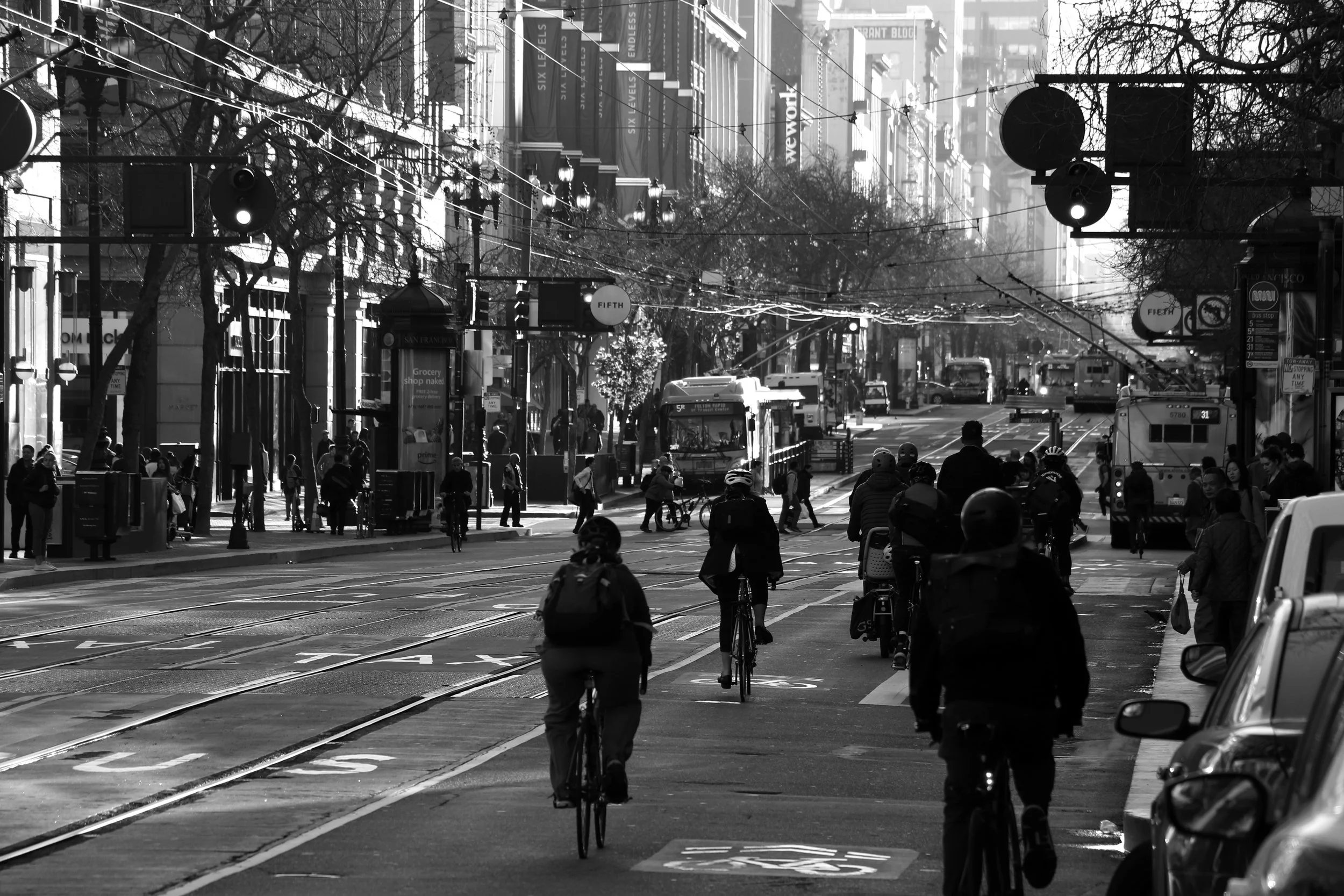
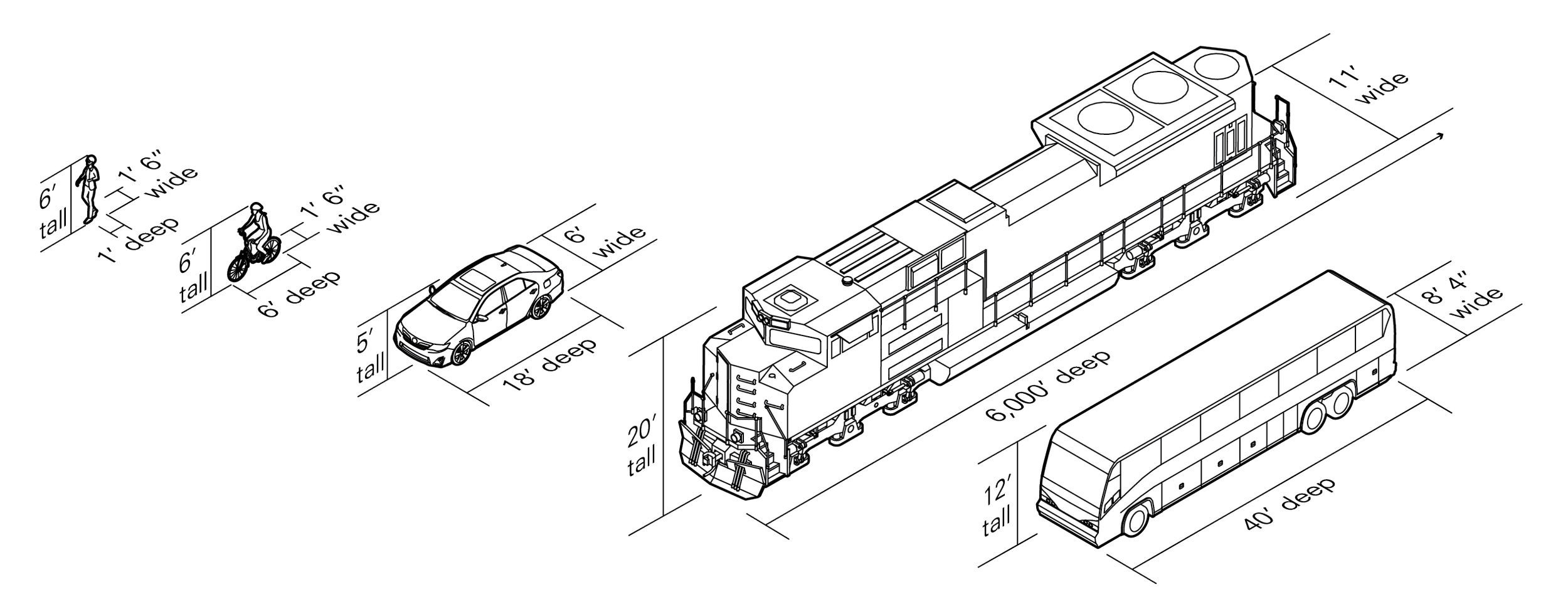
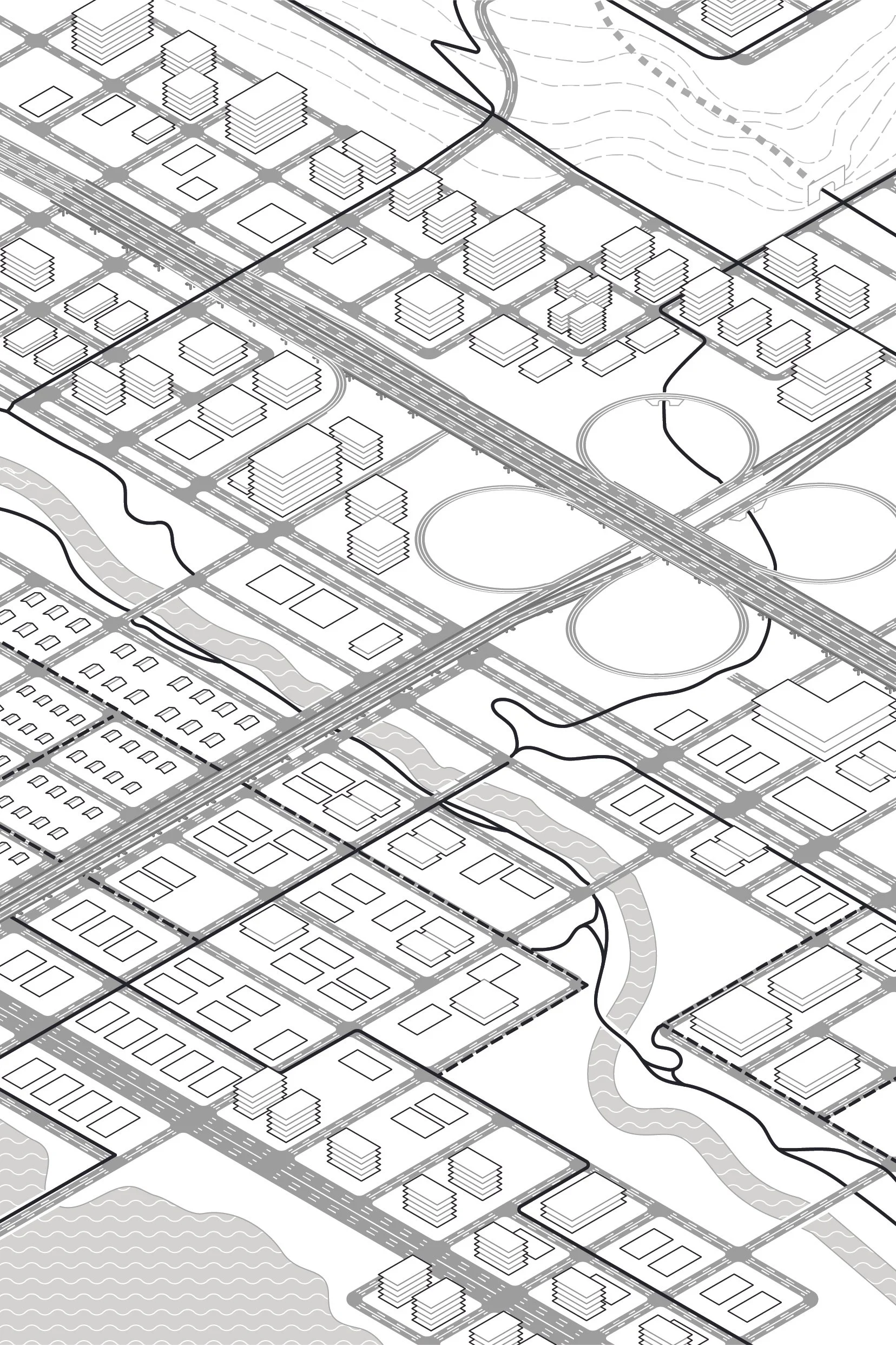
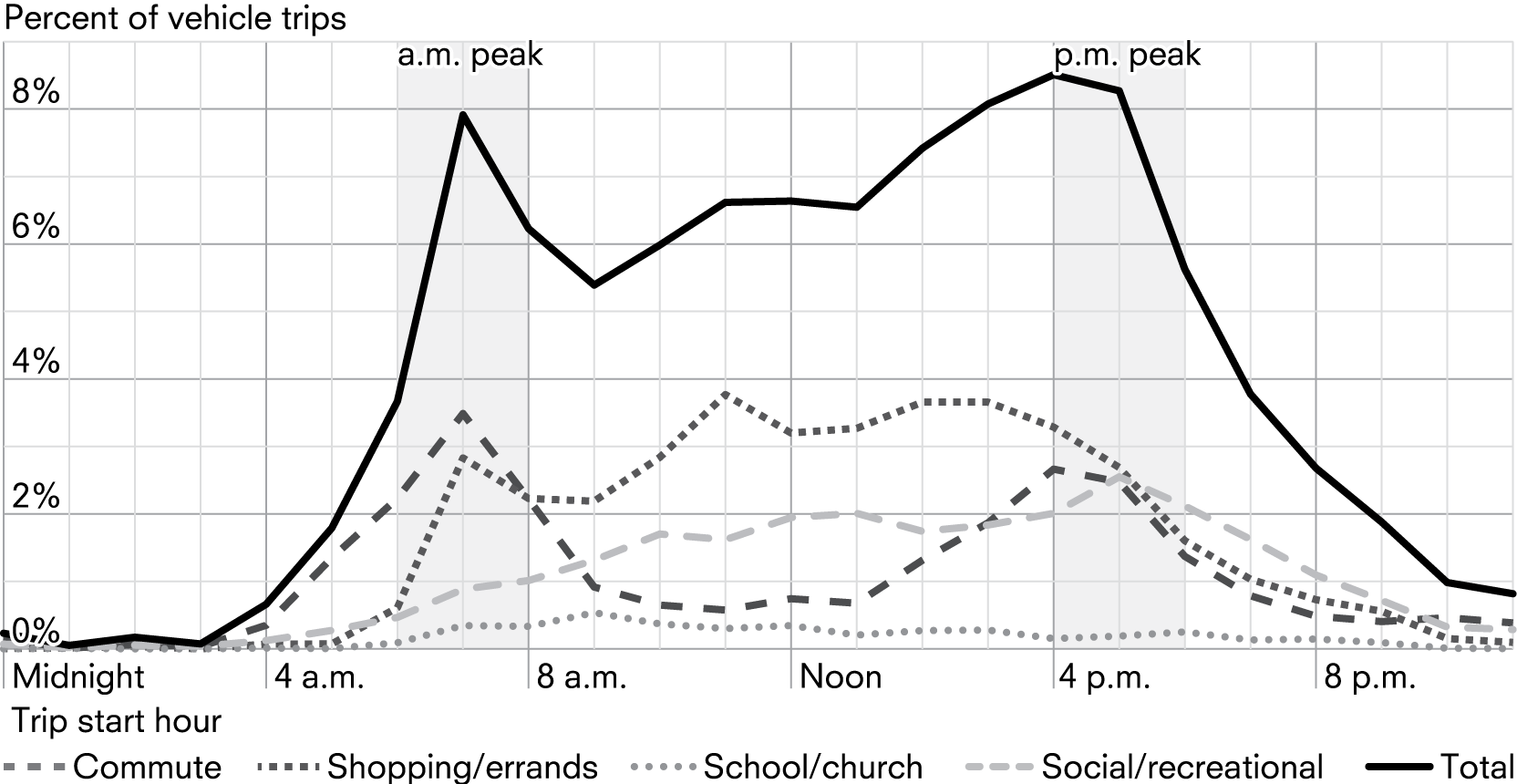
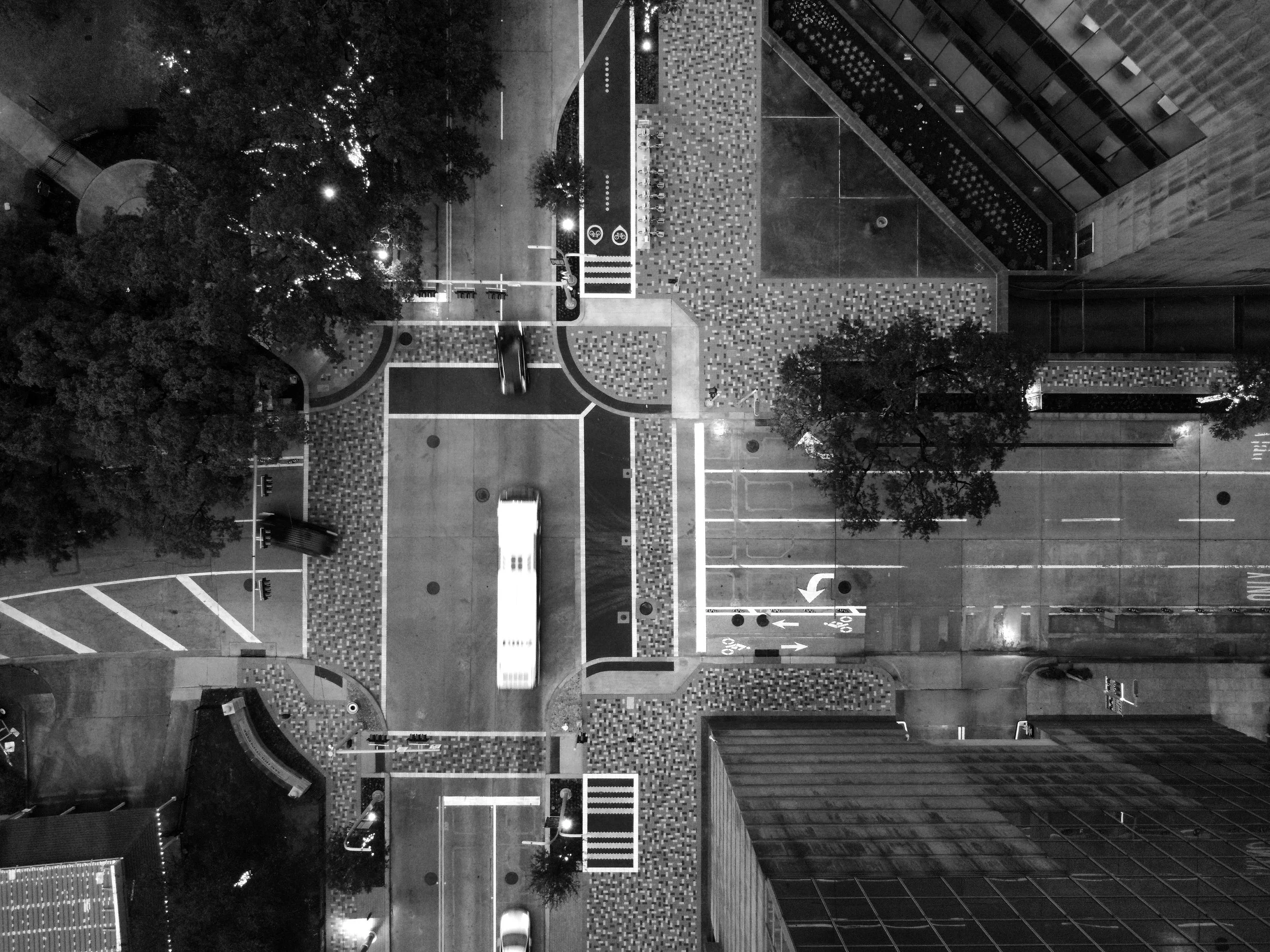
The most significant limitation on transportation in cities is space and that each mode of urban transportation—pedestrians, bicycles and other micromobility devices, cars, trains, and transit—has inherent geometric properties that no amount of policy or design can change.
Networks
Cities grow around transportation networks. The structures of road networks and the locations of rail lines set where buildings will go. After that, we have to fit transportation networks into existing cities.
Role
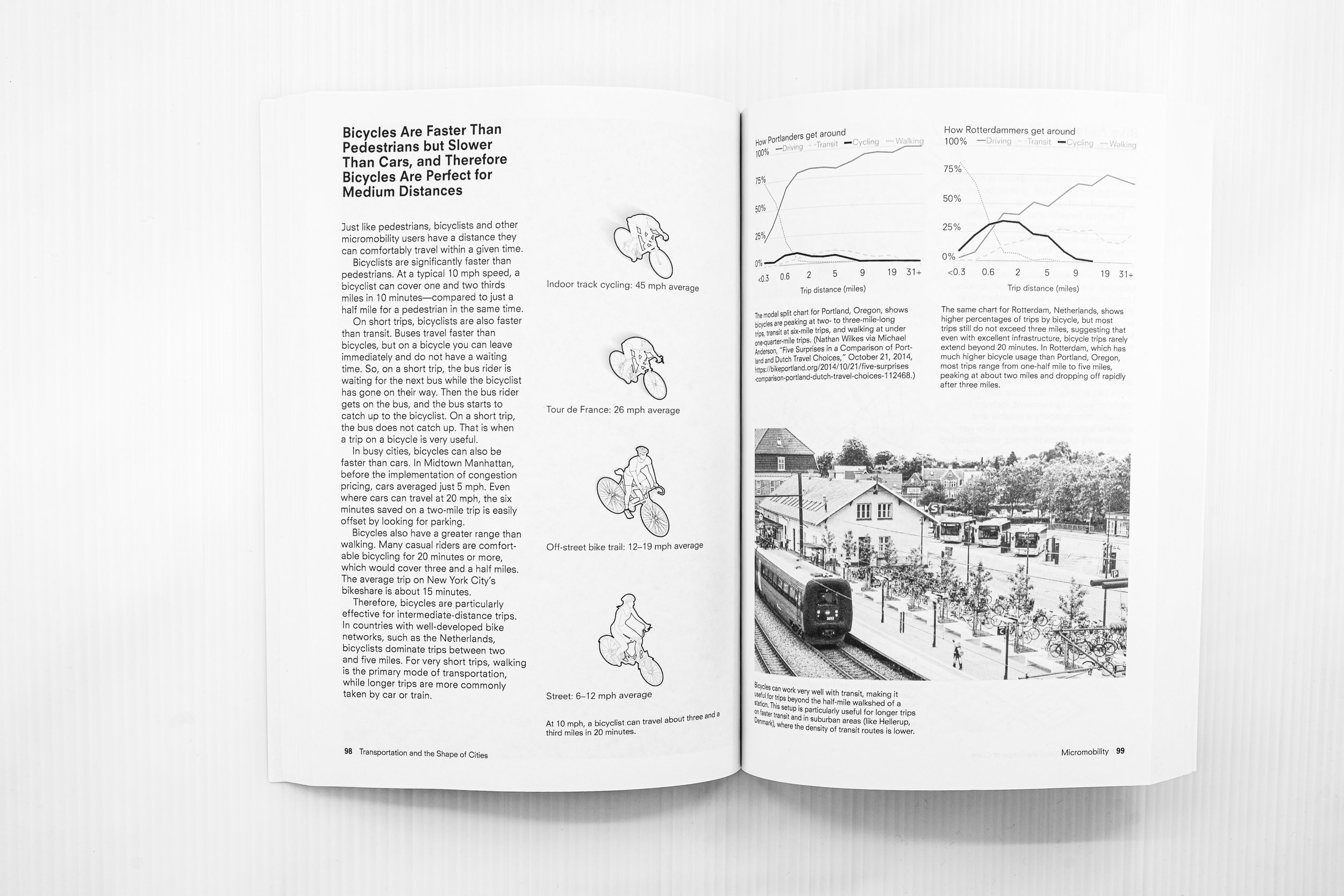
Each mode has unique characteristics that define their role within the overall transportation system. Trains are efficient at moving people and goods, while cars and trucks are flexible to move around a city with less restrictions. Bikes make up a small portion of trips compared to other modes but they take up less space than cars and transit and get you further than walking would. A person who drives to work everyday might walk to lunch at noon, ride a bike with friends on weekends, and travel by train or bus when visiting family in other cities.
Urban Design
Most transportation projects will last for decades, and their effects will last even longer—there are cities located where they are today because of roads built two thousand years ago. When we build a new transportation connection, we are not simply shifting existing trips to a new street or a transit line. With new travel options, people make different decisions on where to live, where to work, where to eat, where to shop, and even how often to leave home.
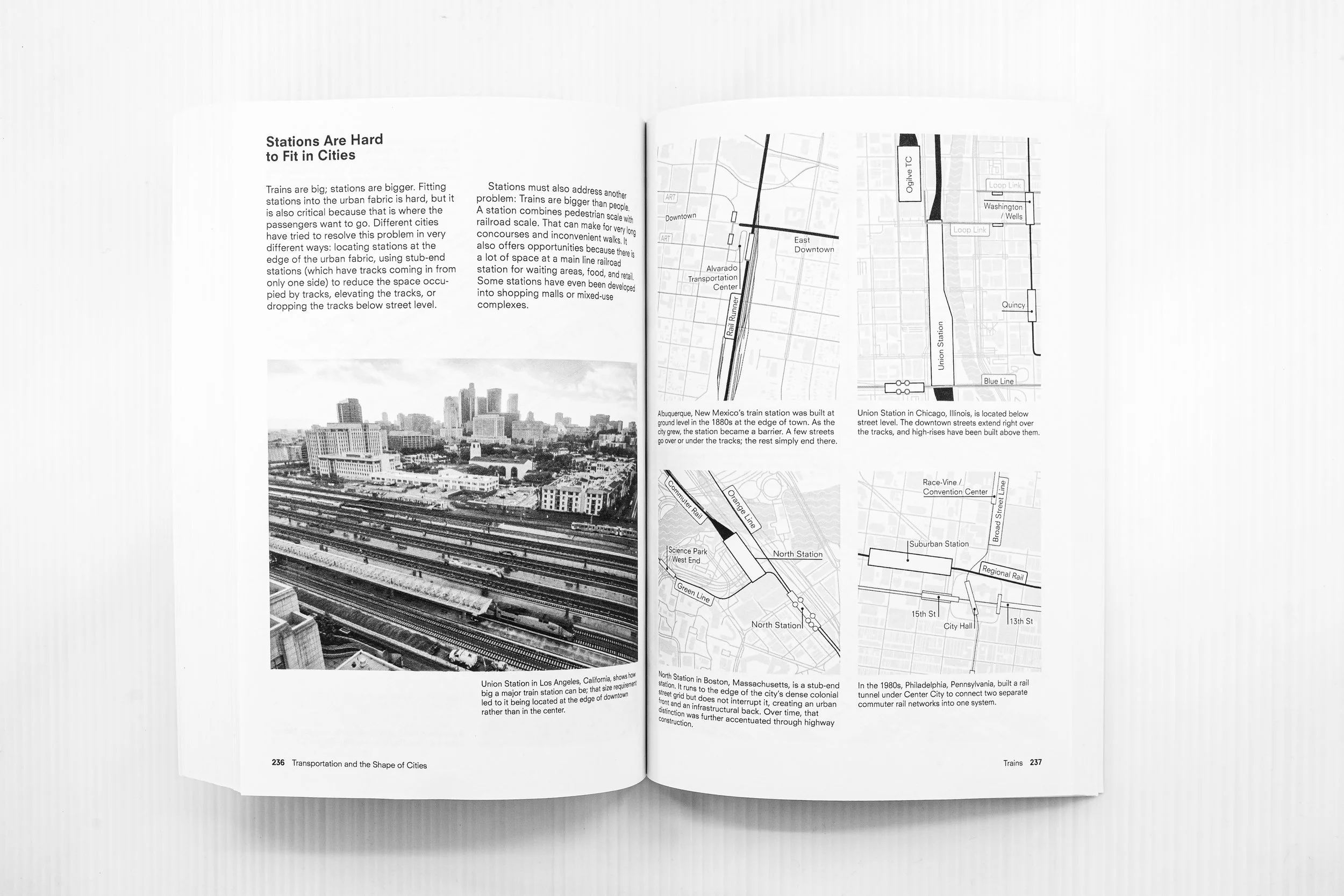
The book is organized around the five major modes of ground transport: pedestrians, micromobility, cars, trains, and transit. We generally cover them in increasing size—from a six-foot-tall pedestrian to a 6,000-foot-long train—and then finish with transit, which is not as much a kind of vehicle as a way of using vehicles. For each, we discuss its geometry, how it works as a network, its role in the transportation system, and how it fits into urban design.